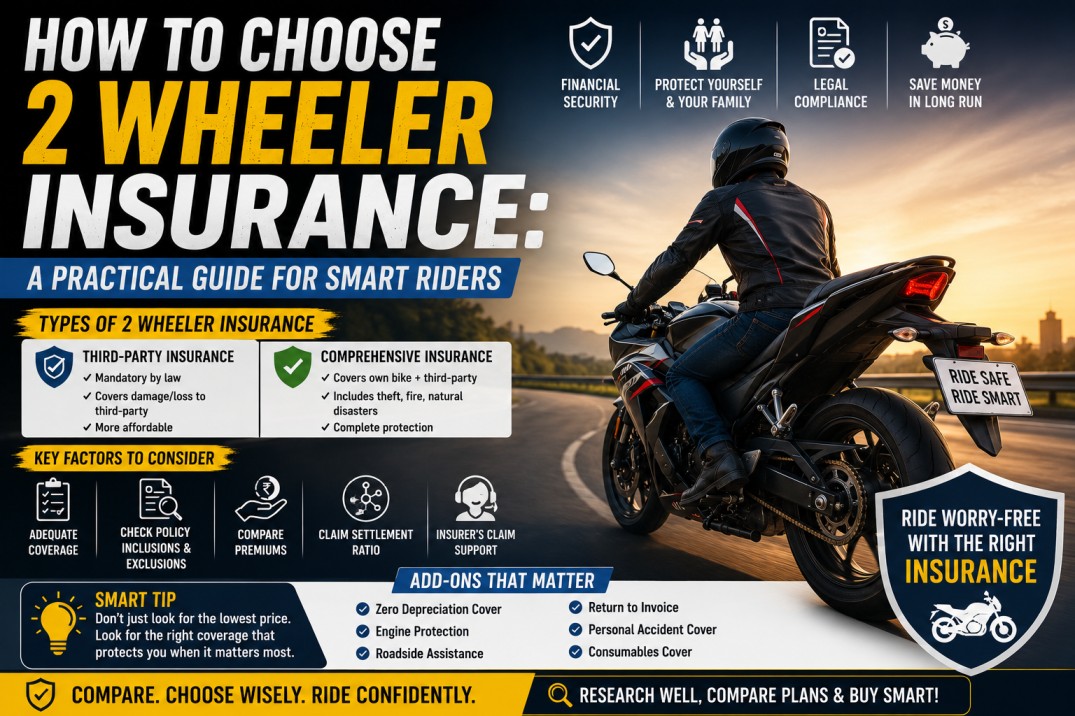
The day I bought my first bike, I spent hours comparing mileage, torque, and colors.
Insurance? I picked the cheapest option in five minutes.
Six months later, after a minor accident and a frustrating claims process, I realized something important: learning how to choose 2 wheeler insurance is just as important as choosing the bike itself.
Insurance isn’t just a legal formality. It’s financial protection, peace of mind, and sometimes the difference between a minor inconvenience and a major financial setback.
In this detailed guide, we’ll break down everything you need to know—from policy types and claim settlement ratios to hidden exclusions—so you can make a confident, informed decision.
Why 2 Wheeler Insurance Is Not Optional
Before we dive into how to choose 2 wheeler insurance, let’s clarify something crucial.
In India, as per the Motor Vehicles Act, 1988, third-party insurance is mandatory for all vehicles. The Insurance Regulatory and Development Authority of India (IRDAI) governs insurance providers and regulations.
But legal compliance is just one part of the story.
Two-wheelers account for nearly 70% of India’s total vehicle population, and accident rates remain significant. According to government road safety data, two-wheeler riders represent a large percentage of road fatalities.
Which means your insurance decision is not a box-ticking exercise—it’s risk management.
Step 1: Understand the Types of 2 Wheeler Insurance
The first step in learning how to choose 2 wheeler insurance is understanding what options exist.
🛡️ 1. Third-Party Insurance (Mandatory)
Covers:
- Injury to third parties
- Property damage to others
- Legal liabilities
Does NOT cover:
- Damage to your own bike
- Theft
- Natural disasters
✅ Cheapest option
❌ Least coverage
🔧 2. Comprehensive Insurance (Recommended)
Covers:
- Third-party liabilities
- Own damage
- Theft
- Fire
- Natural disasters (flood, earthquake)
- Man-made events (riots, vandalism)
For most riders, comprehensive coverage is the smarter choice.
⚙️ 3. Standalone Own-Damage Policy
Introduced after IRDAI reforms, this allows:
- Third-party policy from one insurer
- Own damage cover from another
Useful if:
- You want better coverage without changing your mandatory third-party policy.
Quick Comparison Table
| Feature | Third-Party | Comprehensive | Standalone OD |
|---|---|---|---|
| Mandatory by Law | ✅ Yes | ✅ Includes TP | ❌ No |
| Own Bike Damage | ❌ No | ✅ Yes | ✅ Yes |
| Theft Cover | ❌ No | ✅ Yes | ✅ Yes |
| Premium Cost | Low | Medium–High | Medium |
| Recommended For | Budget buyers | Most riders | Policy customization |
Step 2: Check the Insurer’s Claim Settlement Ratio (CSR)
This is where many riders make mistakes.
The Claim Settlement Ratio (CSR) indicates how many claims an insurer successfully settles out of 100 received.
You can check official data from:
- IRDAI annual reports
- Company disclosures
A CSR above 90% is generally considered reliable.
But here’s the insight most people miss:
A high CSR is good—but fast claim processing and digital support matter just as much.
Check:
- Average claim processing time
- Cashless garage network
- Customer reviews
Step 3: Evaluate the Insured Declared Value (IDV)
IDV = Current market value of your bike.
It determines:
- Premium amount
- Maximum payout in case of total loss or theft
Lower IDV → Lower premium → Lower compensation
Higher IDV → Higher premium → Better protection
Pro Tip: Don’t blindly choose the lowest IDV just to save ₹500–₹1000. If your bike gets stolen, you’ll regret it.
Step 4: Add-Ons That Actually Matter
Add-ons can significantly improve coverage. But not all are necessary.
✅ Must-Have Add-Ons
- Zero Depreciation Cover
- No deduction for depreciation during claims
- Ideal for new bikes (under 5 years old)
- Engine Protection Cover
- Covers engine damage due to water ingress
- Crucial in flood-prone cities
- Roadside Assistance (RSA)
- Towing
- Battery jumpstart
- Fuel delivery
- Return to Invoice
- Full invoice value reimbursement in case of total loss
Add-On Cost Comparison
| Add-On | Worth It? | Best For |
|---|---|---|
| Zero Dep | ⭐⭐⭐⭐⭐ | New bikes |
| Engine Protect | ⭐⭐⭐⭐ | Monsoon areas |
| RSA | ⭐⭐⭐⭐ | Daily commuters |
| Accessories Cover | ⭐⭐⭐ | Modified bikes |
Step 5: Compare Premium vs Coverage (Not Just Price)
Many riders searching how to choose 2 wheeler insurance make one common mistake:
They sort by “lowest premium.”
Instead, evaluate:
✅ Coverage scope
✅ Claim network
✅ Deductibles
✅ Exclusions
A ₹200 cheaper premium isn’t worth poor service.
Use comparison portals carefully, but verify details on the insurer’s official website before buying.
Step 6: Understand Exclusions Clearly
Insurance doesn’t cover everything.
Common exclusions:
- Riding without valid license
- Drunk driving
- Mechanical wear and tear
- Using private bike for commercial purposes
Always read the policy wording PDF before purchase.
Step 7: Network Garages Matter More Than You Think
Cashless claim settlement depends on authorized garages.
Before buying:
- Check nearby network garages
- Ask your local service center if they work with your chosen insurer
If your preferred service center isn’t in-network, claim processing becomes reimbursement-based—slower and paperwork-heavy.
Step 8: Consider Multi-Year Policies
IRDAI mandates:
- 5-year third-party coverage for new bikes
But comprehensive coverage can be:
- 1 year
- 2–3 years bundled
Multi-year benefits:
- Protection against annual premium hikes
- No renewal reminders stress
- Possible discounts
Real-World Scenario: What Happens During a Claim?
Let’s say:
You hit a pothole.
Front suspension damaged.
Repair estimate: ₹18,000.
With Basic Policy:
- Depreciation deducted
- You may pay ₹5,000–₹7,000
With Zero Dep:
- You pay only mandatory deductible (₹1,000–₹2,000)
That’s the difference between smart and cheap insurance.
Digital Features: The 2026 Advantage
Modern insurers now offer:
- App-based claim filing
- AI-based inspection via photo upload
- Real-time claim tracking
- Instant policy issuance
Look for insurers investing in digital infrastructure. It saves hours of frustration.
Red Flags to Avoid
🚩 Unrealistically low premium
🚩 Hidden deductibles
🚩 Poor online reviews
🚩 Limited network garages
🚩 Slow customer service
Insurance is a long-term relationship—not a one-time transaction.
Personal Insight: Insurance Is Emotional Security
After my minor accident, what stressed me wasn’t the money.
It was uncertainty.
Would the claim be approved?
Would I need to chase paperwork?
How long would my bike stay in the garage?
Good insurance removes that anxiety.
That peace of mind is the real product you’re buying.
Quick Checklist: How to Choose 2 Wheeler Insurance
Before purchasing, confirm:
✅ Comprehensive coverage
✅ IDV is realistic
✅ Claim settlement ratio above 90%
✅ Zero depreciation add-on (if bike <5 years old)
✅ Nearby network garages
✅ Transparent policy wording
If you check all six, you’re making a solid decision.
Conclusion: Smart Insurance Is Smart Riding
Understanding how to choose 2 wheeler insurance isn’t complicated—but it requires attention to detail.
Don’t treat insurance as a mandatory expense.
Treat it as:
- Financial protection
- Stress reduction
- Risk management
- Long-term savings
The right policy doesn’t just protect your bike. It protects your peace of mind.
🚀 Your Next Step
Before renewing or buying insurance:
- Compare at least 3 insurers.
- Check CSR and network garages.
- Choose coverage—not just cost.
Have you ever faced a claim rejection or smooth claim experience? Share your story in the comments below.
And if this guide helped you understand how to choose 2 wheeler insurance, share it with fellow riders who might be making the same mistake you once did.