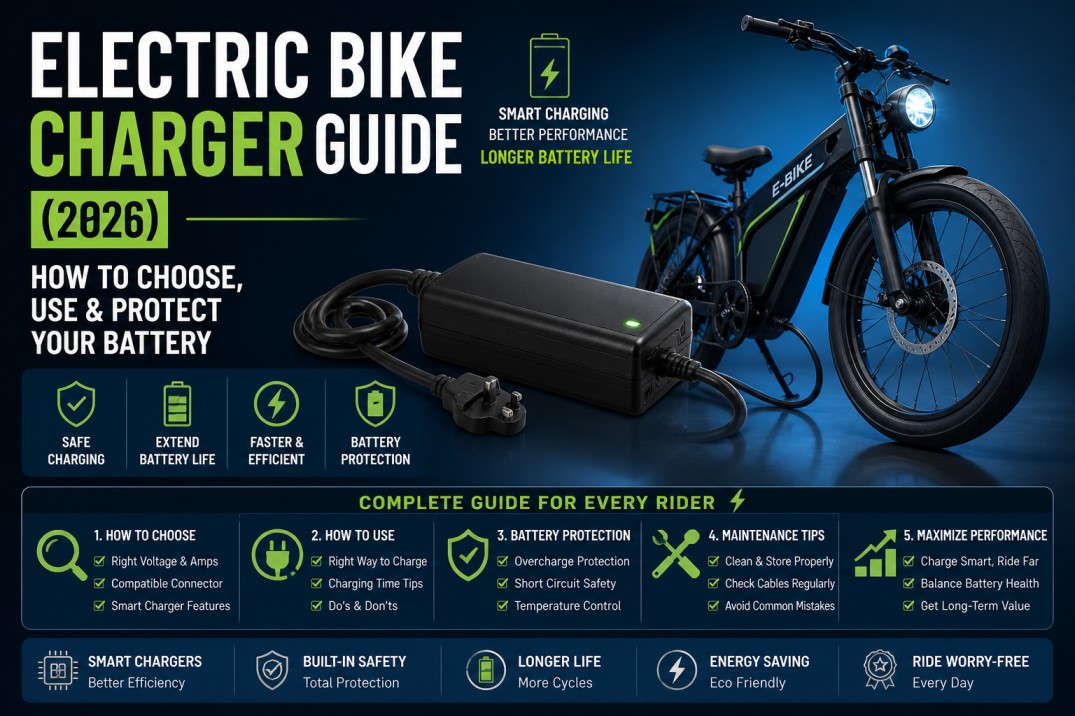
The Small Device That Controls Your Entire Ride
Your motor gets the spotlight.
Your battery gets the investment.
But your electric bike charger determines how long both of them survive.
Most riders ignore their e-bike battery charger until something fails. Slow charging. Reduced range. Overheating. Or worse—safety hazards.
With global e-bike adoption rising fast (see industry data from PeopleForBikes), understanding your electric bike charger is no longer optional. It directly affects e-bike battery life, charging safety, and long‑term ownership costs.
This complete guide explains:
- How an electric bike charger works
- Electric bike battery charging time explained
- 36V vs 48V electric bike charger differences
- 2A vs 4A e-bike charger comparison
- Original vs aftermarket e-bike charger risks
- Signs your electric bike charger is not working
- How to choose an e-bike charger properly
Let’s dive in.
How an Electric Bike Charger Works
An electric bike charger converts AC electricity from your wall outlet into DC power that your battery can store.
A modern lithium battery charger for e-bikes does much more than simple conversion. It includes:
- Voltage regulation
- Current control
- Overcharge protection
- Thermal monitoring
- Automatic shutoff
Most e-bikes use lithium‑ion batteries. According to the U.S. Department of Energy, lithium batteries require precise charging control to prevent degradation and fire risk
👉 https://www.energy.gov/eere/vehicles/articles/how-lithium-ion-batteries-work
That’s why using the correct electric bike charger is critical.
Types of Electric Bike Chargers
1️⃣ Standard OEM Electric Bike Charger (Recommended)
The safest choice is the original charger that came with your bike.
✅ Designed for your exact battery voltage
✅ Balanced electric bike battery charging time
✅ Built-in safety features
If you’re unsure how to choose an e-bike charger, stick with OEM.
2️⃣ Fast Charger for Electric Bike
A fast charger for electric bikes increases amperage to reduce charging time.
2A vs 4A Ebike Charger Comparison
| Charger | Output | How Long Does Ebike Take to Charge (500Wh Battery) |
|---|---|---|
| 2A | Standard | 5–6 hours |
| 4A | Fast | 2.5–3 hours |
So how long does an e-bike take to charge? It depends on battery size and amperage.
⚠ Faster charging equals more heat
⚠ More heat = reduced e-bike battery life
Research from the National Renewable Energy Laboratory (NREL) confirms higher charge rates increase battery stress:
👉 https://www.nrel.gov/transportation/battery-lifespan.html
Occasional fast charging is fine. Daily high-speed charging is not ideal.
3️⃣ Smart Ebike Charger
A smart ebike charger allows adjustable amperage and percentage limits (like charging only to 80%).
Why does this matter?
Lithium batteries last longer when not charged to 100% daily. Battery University explains partial charging improves longevity.
👉 https://batteryuniversity.com/article/bu-808-how-to-prolong-lithium-based-batteries
If you commute daily, a smart ebike charger is one of the best upgrades for long-term battery protection.
4️⃣ Universal Ebike Charger (Use Carefully)
A universal e-bike charger may work in emergencies, especially if you search “e-bike charger near me.”
But always verify:
- Voltage (36V, 48V, 52V)
- Output current
- Connector type
- Polarity
Using the wrong charger often causes electric bike charger not-working issues.
36V vs 48V Electric Bike Charger: Voltage Is Critical
You must match your charger exactly to your battery.
Common options:
- 36V e-bike charger
- 48V electric bike charger
- 52V systems
Using the wrong voltage charger can:
❌ Damage battery cells
❌ Trigger BMS errors
❌ Cause overheating
❌ Prevent charging entirely
Never guess compatibility.
Electric Bike Battery Charging Time Explained
Electric bike battery charging time depends on:
- Battery capacity (Wh)
- Charger amperage (2A vs 4A)
- Battery condition
Examples:
- 36V 10Ah battery + 2A charger → 4–5 hours
- 48V 15Ah battery + 2A charger → 6–7 hours
- Same battery + 4A charger → 3–4 hours
If you’re wondering how long an ebike takes to charge, check your battery label and charger rating.
How to Charge Ebike Battery Properly (Expert Tips)
Following proper ebike charging tips can dramatically extend battery lifespan.
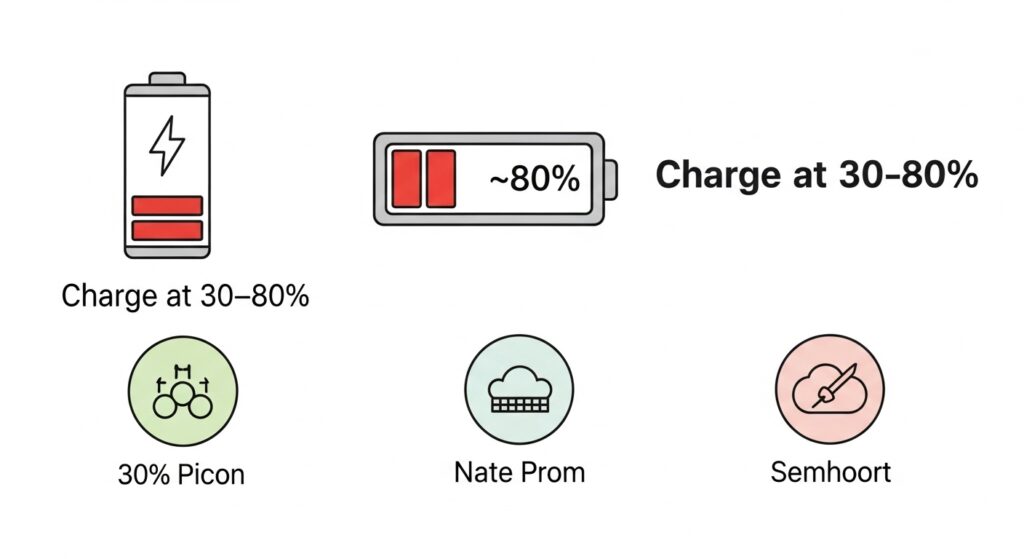
✅ Charge between 30–80% for daily use
✅ Avoid deep discharge (0%)
✅ Let battery cool before charging
✅ Use certified lithium battery charger for e-bike
✅ Store at 40–60% if unused
Avoid:
❌ Charging in extreme heat
❌ Overnight daily charging
❌ Cheap aftermarket chargers
If your e-bike charger is getting hot, unplug it immediately.
Electric Bike Charger Not Working? Troubleshooting Guide
Common issues include:
- No LED indicator
- Slow charging
- Charger overheating
- Charger stops mid-cycle
Ebike Charger Light Meaning
- Solid red → Charging
- Solid green → Fully charged
- E-bike charger blinking red → Possible fault
- No light → Charger failure
If you’re unsure how to tell if an e-bike charger is bad:
- Test with a compatible charger
- Check voltage output
- Inspect for burning smell
Often, replacing the e-bike battery charger replacement is cheaper than replacing the battery.
Original vs Aftermarket Ebike Charger
Choosing between original vs. aftermarket e-bike chargers matters.
Original Charger
✅ Exact voltage match
✅ Better heat management
✅ Safer charging
Aftermarket Charger
✅ Lower electric bike charger price
❌ Risk of overheating
❌ Voltage instability
❌ Shorter ebike battery life
Always prioritize safety over saving a few dollars.
Electric Bike Charger Price (India & Global)
If you’re searching:
- Electric bike charger price
- Electric cycle charger price India
- Buy e-bike charger online India
Average pricing:
- 36V ebike charger → ₹1,500–₹3,000
- 48V electric bike charger → ₹2,000–₹4,500
- Smart ebike charger → ₹4,000+
Check certification before buying online.
Energy Cost: Is Charging Expensive?
A 500 Wh battery uses 0.5 kWh of electricity.
At $0.15 per kWh:
0.5 × $0.15 = $0.075 per charge.
That’s under 8 cents.
Charging daily costs just a few dollars per month, making e-bikes one of the most affordable transport options.
When Should You Upgrade Your Electric Bike Charger?
Upgrade if:
- You commute daily
- You want adjustable charging limits
- You need a second charger for office
- Your charger frequently overheats
But don’t upgrade just for speed — upgrade for battery longevity and control.
Environmental Impact of Proper Charging
E-bikes produce far less CO₂ per mile than cars, even accounting for electricity production.
Efficient charging and proper battery maintenance improve sustainability further. Learn more from the U.S. Environmental Protection Agency:
👉 https://www.epa.gov/greenvehicles/electric-vehicle-myths
Key Takeaways
Your electric bike charger is not just an accessory — it’s a battery protection system.
Remember:
- Match voltage exactly
- Avoid excessive fast charging
- Monitor heat
- Use OEM or certified chargers
- Follow smart e-bike charging tips
Treat your electric bike charger with the same seriousness as your battery.
Final Thoughts: Respect the Power Source
Your e-bike gives you freedom—longer rides, smoother climbs, and easier commutes.
But that freedom starts with a reliable electric bike charger.
Choose the best electric bike charger for your voltage.
Understand electric bike battery charging time.
Avoid risky universal e-bike charger purchases.
Protect your e-bike battery life long-term.
Small device. Massive impact.
Over to You
Are you using a 36V e-bike charger or a 48V electric bike charger?
Have you experienced an e-bike charger blinking red issue?
Share your experience below.
And if this guide helped you understand how to choose an e-bike charger and how to charge an e-bike battery safely—share it with fellow riders. ⚡🚴